WHO Inception Workshop on Strengthening Health System Resilience and Essential Public Health Functions Including Integration of Chinese Medicine Successfully Held in Cairo
Release time: Apr 8,2026
Reading volume: 4963
On 31 March – 1 April 2026, the WHO inception workshop on “Strengthening Health System Resilience and Essential Public Health Functions (EPHFs) Including Integration of Chinese Medicine” was held in Cairo, Egypt. The project is supported by China’s Global Development and South-South Cooperation Fund (GDF) and aims to strengthen essential public health functions, integrate traditional medicine practices into health systems, and enhance health system resilience. The Chinese government provides financial support for this project through the Global Development Fund. At the same time, China’s practices in promoting health service system integration and universal coverage of essential public health services, organically integrating traditional medicine into the health system, and strengthening primary healthcare capacity and multi-sectoral collaboration have provided important technical references for this project.
This workshop marked the official launch of the project and opened a new chapter of cooperation between China and WHO in advancing health system resilience based on essential public health functions. Mr. Li Yu, Vice President and Secretary-General of the World Federation of Chinese Medicine Societies (WFCMS), was invited to attend the workshop and delivered a speech at the opening ceremony.
Dr Hanan Balkhy, WHO Regional Director for Eastern Mediterranean, Dr Kalipso Chalkidou, Director, Performance, Financing and Delivery, WHO HQ (online), Dr Li Jiangbin, Director, Monitoring and Statistical Research Center, National Administration of Traditional Chinese Medicine, Professor Ren Minghui, Director of Institute for Global Health, Director of China Center for Health Development Studies, Peking University, Dr Sohel Saikat, Senior Advisor, Primary Health Care, Lead, Essential Public Health Functions and Health System Resilience, Performance, Financing and Delivery, WHO HQ, Dr Li Yachan, Technical Officer, TCI, WHO HQ, and other guests attended the workshop.
As the largest international academic organization of traditional Chinese medicine in the world, WFCMS has been committed to promoting the dissemination, development and integration of TCM internationally since its establishment in 2003. In 2015, it officially established a cooperative relationship with WHO, and the areas of cooperation have been continuously expanded. WFCMS is one of the partners of this project, and will fully leverage its platform advantages and expert network, actively participate in project activities, share practical experiences, and provide technical support to facilitate the successful realization of project objectives at all levels.
In his speech, Secretary-General Li Yu stated that the mission of the WFCMS is highly consistent with WHO’s advocacy for universal health coverage, health system resilience building, and strengthening essential public health functions. Regarding this important three-year project launched by WHO, WFCMS will fully support it, make full use of its platform advantages and expert network in standard setting, academic exchange, personnel training and international promotion, actively participate in project activities, share practical experiences, provide technical support, and help ensure the smooth realization of project objectives at all levels.
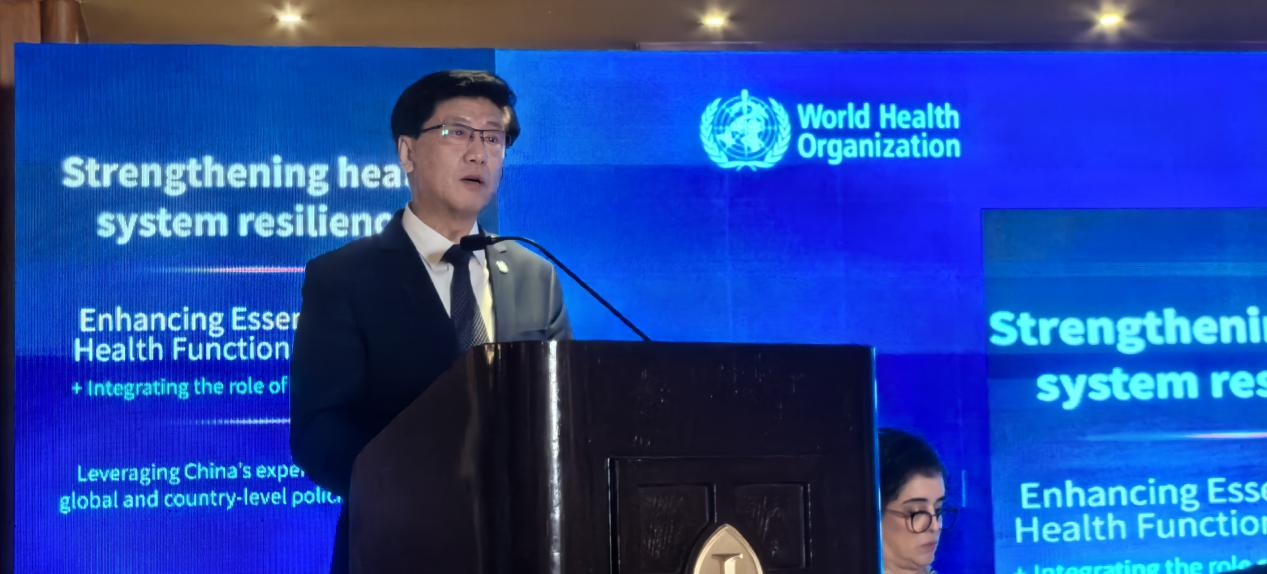
Secretary-General Li Yu delivering a speech
In her speech, Dr Hanan Balkhy, WHO Regional Director for Eastern Mediterranean, noted that this workshop marks a new phase in the cooperation between WHO and China. She sincerely thanked the Chinese government for supporting this initiative benefiting Iraq, Morocco and Pakistan. The world currently faces threats from infectious diseases, climate change, conflict, increasing burden of non-communicable diseases and persistent health inequalities. By sharing and drawing on China’s experience in integrating TCM into public health functions and services to support national policies and practices, and adapting to country contexts to promote the integration of local health service practices, including traditional medicine, into essential public health services to enhance health system resilience, it can help strengthen surveillance, early detection and response capacities, and improve population health. She emphasized that this project fully aligns with WHO’s Global Health Strategy 2025–2028 and provides a valuable opportunity to tailor support to country needs.
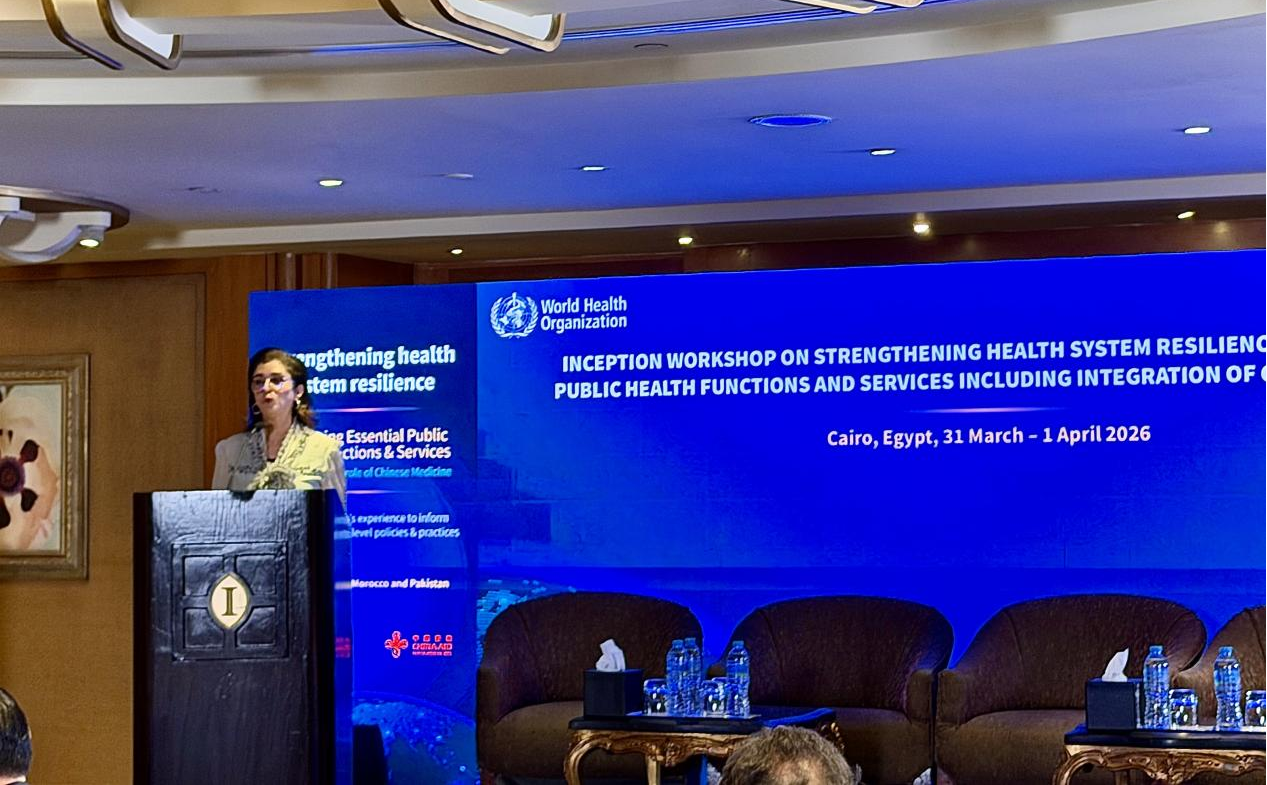
Dr Hanan Balkhy delivering a speech
Dr Sohel Saikat, Senior Advisor, Primary Health Care, Lead, Essential Public Health Functions and Health System Resilience, Performance, Financing and Delivery, WHO HQ, introduced the project. He said that the project will systematically review the experiences of China and WHO, combine them with the actual needs of Iraq, Morocco and Pakistan, explore effective pathways for integrating traditional medicine, primary health care and other primary healthcare service platforms into essential public health functions and services, and provide concrete support to countries in strengthening health system resilience.
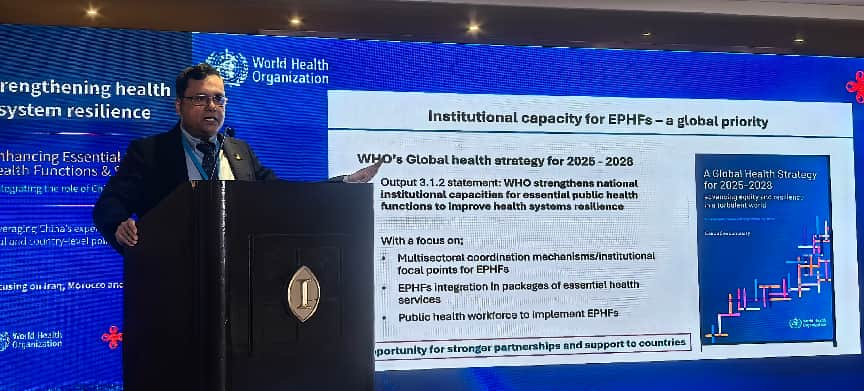
Dr Sohel Saikat introducing the project
Representatives from the ministries of health of Iraq, Morocco and Pakistan held discussions on national implementation pathways, including defining essential public health functions, integrating service platforms, conducting stakeholder analysis, and strengthening health workforce allocation and capacity building.
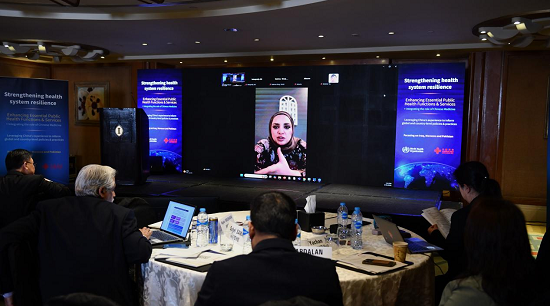
Dr Jinan Taher Huwayn, Head of Traditional and Complementary Medicine, Ministry of Health, Iraq (online)
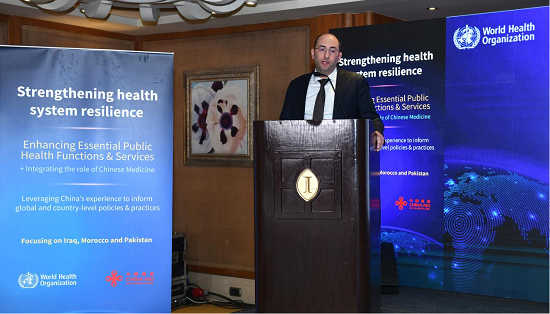
Dr Aniss Lakhal, Technical Officer, Primary Health Care, Ministry of Health and Social Protection, Morocco
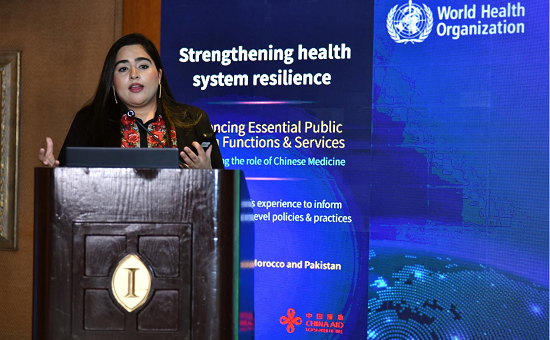
Dr Palwasha Awan, Deputy Director Program IV / Health Systems, Ministry of National Health Services, Regulations and Coordination, Pakistan
During the breakout session, Dr Wang Jing, Assistant to the Secretary-General and Director of the International Liaisons Department of WFCMS, shared WFCMS’s practical experience in promoting TCM development in Morocco. Dr Wang Jing was invited to deliver a summary of the Day 1 discussions. She noted that all parties reached consensus on essential public health functions and the integration of TCM into primary health care, clarified the project framework and objectives, had in-depth exchanges on the actual needs and priorities of Iraq, Morocco and Pakistan, and through group discussions, preliminarily developed country-specific action plans, laying a solid foundation for subsequent work.
Participants expressed their shared anticipation that the cooperation between China and WHO will provide new practical pathways for building resilient and sustainable health systems and promote universal health coverage in Pakistan, Morocco and Iraq.
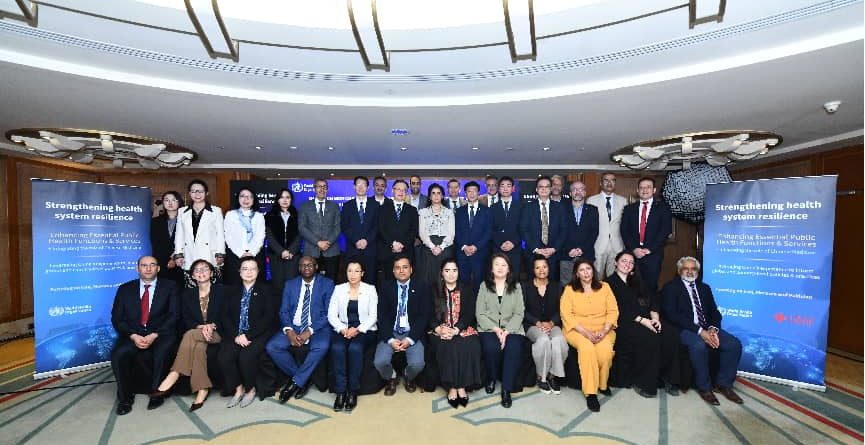
Group photo